How To Pick The Right Partner for Indie Studios
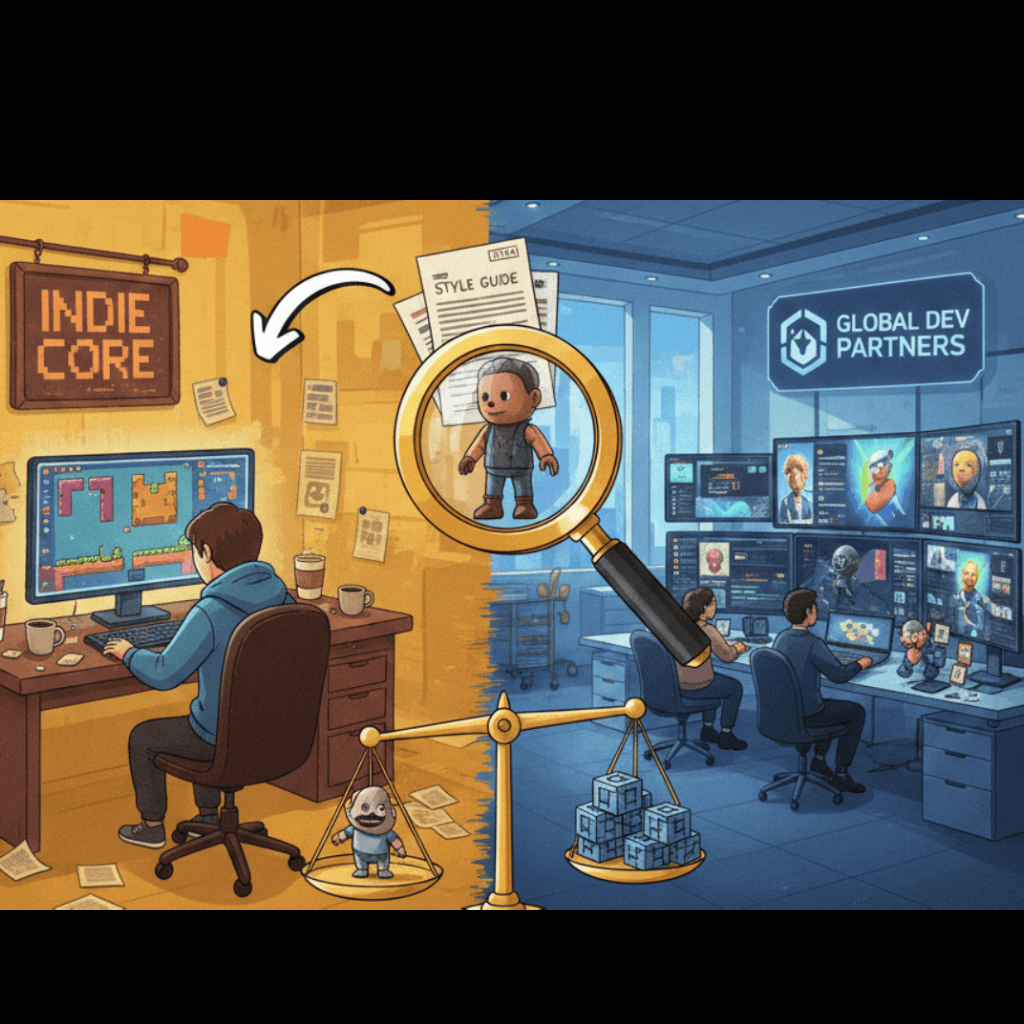
Let's be real for a second. Being an indie developer or running a small studio often feels like you're juggling flaming chainsaws while riding a unicycle. You're the lead programmer, the art director, the marketing department, and the HR manager all rolled into one. 🎪
It's exciting, sure. But it's also the fastest route to burnout. We've seen it happen to brilliant creators who have amazing ideas but just run out of steam trying to build every single asset themselves.
This is where the scary "O" word comes in: Outsourcing.
A lot of indies view outsourcing as "selling out" or admitting defeat. But at GameReady, we see it differently. It's not about losing control; it's about buying back your sanity. It's a strategic move to unlock scalability and flexibility that a small team just can't achieve alone. Let's talk about how to find a partner who actually gets your vision. 🤝
The Scalability Mindset: Why You Can't Do It All
The biggest advantage of game development outsourcing isn't just getting a 3D model made; it's the ability to scale your team up and down instantly.
Imagine you're hitting a crunch period. You need twenty distinct enemy variants for your new level. If you hire three full-time artists, you have to onboard them, pay benefits, and-the hard part-figure out what to do with them once those enemies are finished.
With an outsourcing partner, you turn that valve on when you need it and off when you don't. This flexibility is the superpower of successful indie studios. It allows you to punch above your weight class without the financial anchor of a massive permanent payroll. You stay lean, mean, and focused on the core gameplay loop, while someone else handles the asset production.
Technical Compatibility is Non-Negotiable
Here is where we see a lot of studios make a fatal mistake. They hire a generalist art house that makes "pretty pictures" but has no idea how a game engine actually works.
If you are building your dream game in Unreal Engine 5, you need a partner who speaks that language. You don't just want a .fbx file dumped in your inbox; you want assets that are optimized for Nanite or rigged correctly for the Control Rig.
You should be looking specifically for an Unreal Engine studio or a team that specializes in Unreal Engine outsourcing. Why? Because they understand the pipeline. They know that a material with 400 instructions is going to tank your frame rate. 📉
When vetting a partner, ask them technical questions before you even look at their portfolio. Ask them about their LOD workflows, their naming conventions, and how they handle version control. If they give you blank stares, run away.
The Specialist vs. The Generalist
There is a massive difference between a game development outsourcing studio that claims to do "everything" and one that specializes in your specific niche.
For example, if you are working on a mobile title, the optimization constraints are brutal. You have battery life, thermal throttling, and a dozen different screen resolutions to worry about. A studio that usually makes cinematic assets for PC might deliver high-poly models that look gorgeous but will melt an iPhone in three minutes. 🔥
In this case, you need a partner with a track record in mobile game development outsourcing. They will know how to bake lighting effectively, how to keep draw calls low, and how to make things look good on a 6-inch screen.
On the flip side, if you are doing video game development outsourcing for a next-gen console title, you need a partner who understands photogrammetry, motion capture cleanup, and 4K texturing.
Don't hire a plumber to fix your electrical wiring. Match the studio's expertise to your platform's reality.
Red Flags and Green Flags 🚩
How do you know if a potential partner is going to be a dream or a nightmare?
The Red Flags:
- They say "Yes" to everything. If you ask for an impossible deadline and they say "Sure thing!", they are lying to you.
- Vague pricing. If they can't give you a clear breakdown of costs per asset or per hour, expect hidden fees later.
- No process transparency. If they won't show you work-in-progress (WIP) shots and only want to reveal the final product, you're in for a bad time.
The Green Flags:
- They push back. A good partner will say, "That texture resolution is too high for this object, can we lower it to save memory?" That shows they care about the game's performance, not just the art.
- They ask for documentation. They want your style guides, your lore, and your technical restrictions upfront.
- Communication tools. They are willing to jump into your Slack, Discord, or Trello board to keep things seamless.
Start Small: The "Dating" Phase
You wouldn't marry someone after the first date, right? (Hopefully not! 😅). The same applies here. Never sign a massive contract for your entire game's assets right out of the gate.
Start with a pilot project. Ask them to create one prop, one character, or one environment piece. Treat this as a paid test.
Pay attention to how they handle feedback. When you ask for a revision, do they get defensive? Do they ignore your notes? Or do they listen and adapt? This test run will tell you more about their company culture than any sales pitch ever could.
Quick Recap: Your Hiring Checklist
- Prioritize Flexibility: Look for partners that let you scale up and down as your project evolves.
- Match the Engine: If you use Unreal, hire an Unreal Engine studio. Don't settle for generic 3D modelers.
- Check the Niche: Ensure their portfolio matches your platform (Mobile vs. PC/Console).
- Test the Waters: Always start with a small, paid pilot project to test communication and quality.
Ready to Level Up?
Choosing an outsourcing partner is a big step, but it's often the step that separates the hobbyists from the professional studios. It frees
you up to focus on what you do best: making the game fun.
Let's build something awesome together -> Schedule a call.
Want to master this yourself?
Book your trial lesson and pick up the techniques in this article hands-on with an instructor.