How fast can I learn Unreal Engine?
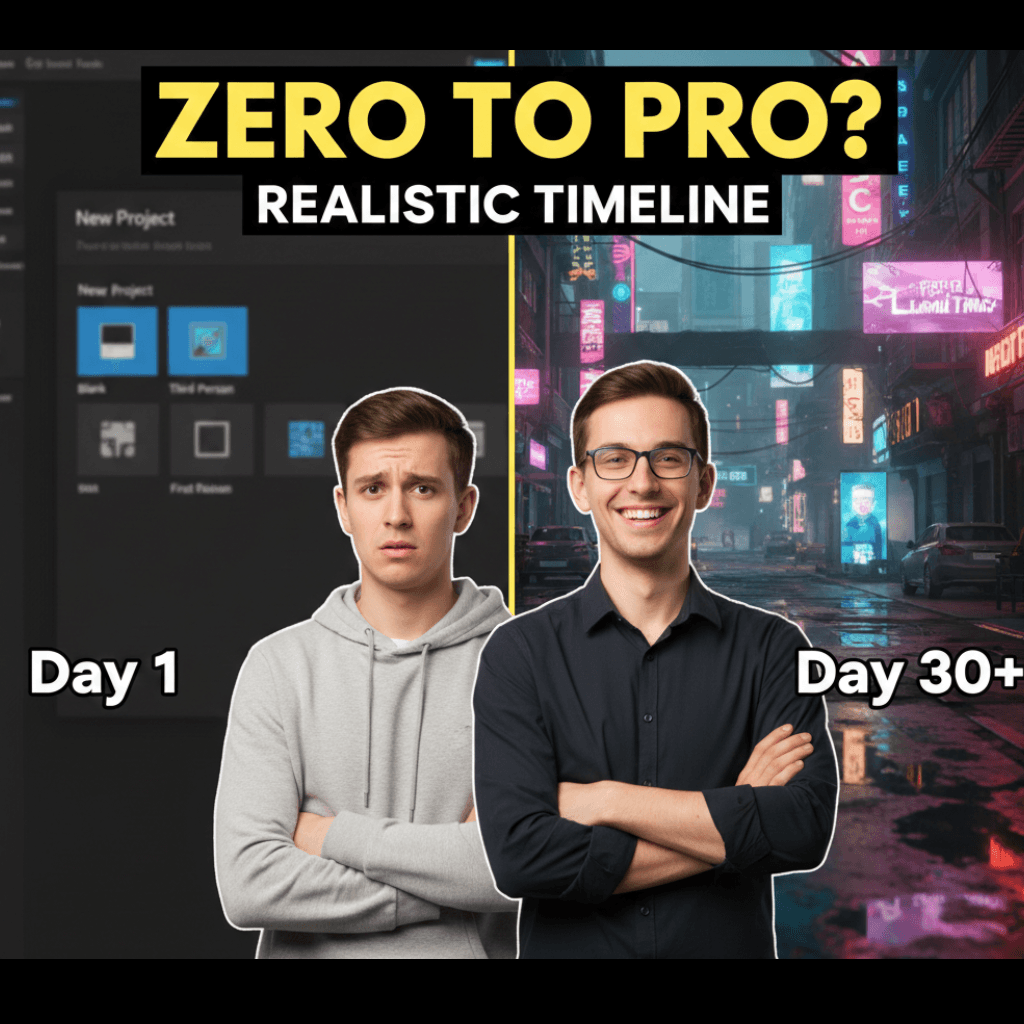
So, you’ve downloaded the Epic Games Launcher, you’re staring at that install button, and the big question pops into your head: “How long is this actually going to take before I’m making games?” It’s the most common question we get here at GameReady. Whether you want to build the next AAA hit, create a cozy indie game, or use Unreal for virtual production, everyone wants a timeline.
The honest truth? There isn’t a single number that fits everyone. If someone tells you, "You can master Unreal in 30 days," they are probably trying to sell you a very expensive, very disappointing PDF. 😅
But don't worry. While we can't give you a magic date to circle on your calendar, we can help you figure out a realistic timeline based on your specific goals and life situation. Let’s break down how long to learn Unreal Engine without the guesswork.
The "It Depends" Factors
When you ask how much time to learn Unreal Engine, the answer is heavily tied to three things: your background, your schedule, and, most importantly, your definition of "learn." Are you starting from absolute zero, or do you have a background in coding (C++) or 3D art? A developer switching from Unity to Unreal might pick up the basics in a few weeks. A complete beginner who has never written a line of code or opened a 3D viewport might need a few months to feel comfortable navigating the interface.
Then there’s your schedule. Are you treating this like a full-time job, or are you chipping away at tutorials for an hour on Sunday evenings? Consistency beats intensity every time. Spending 30 minutes a day is often better than cramming for 8 hours once a week because your brain needs time to absorb the logic of Blueprints and the Engine’s workflow.
And finally, what’s the goal? "Learning Unreal" could mean understanding how to move objects around, or it could mean understanding network replication for a multiplayer shooter. Those are two very different finish lines!
Timeline Breakdown: Setting Realistic Expectations
To make this easier, let’s look at some realistic milestones for the average beginner using Unreal Engine 5.
Phase 1: The Basics (4-8 Weeks)
The Goal: Getting comfortable with the UI and making something move.
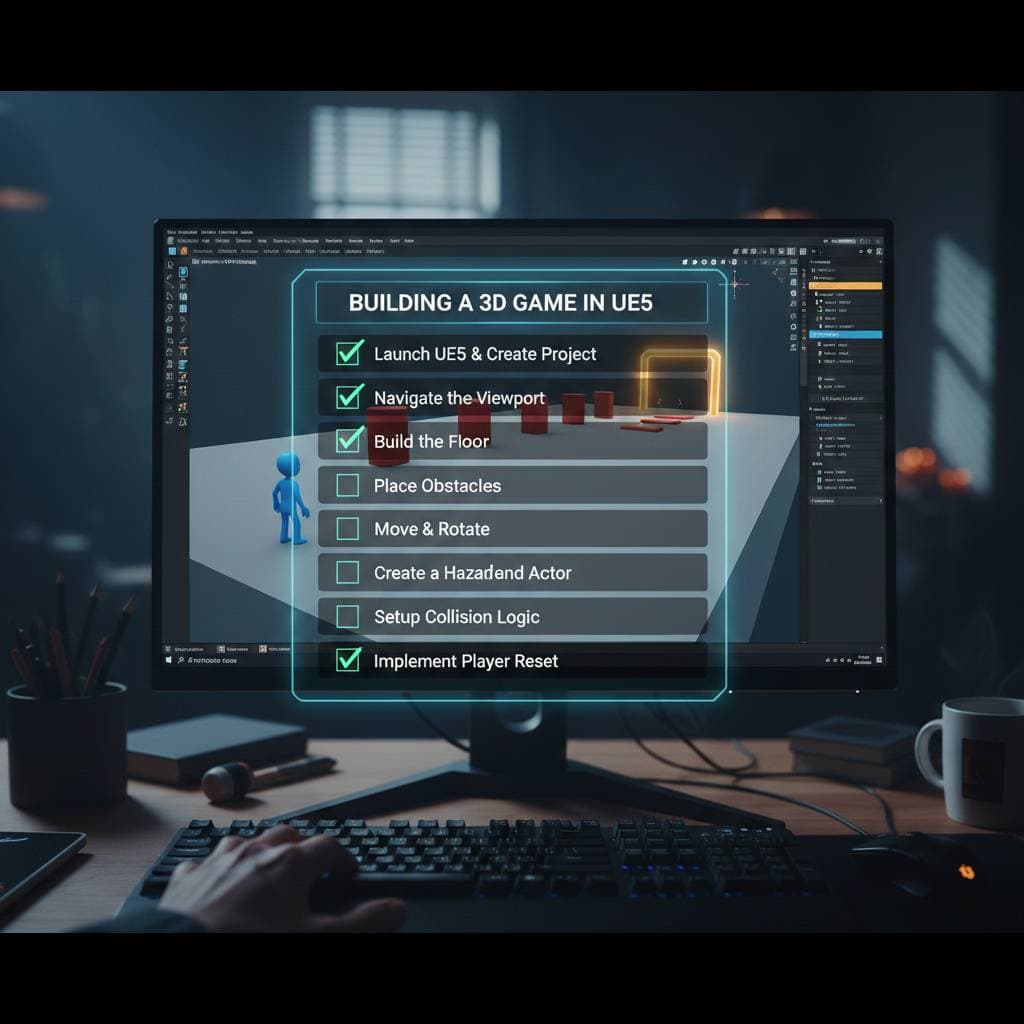
In the first month or two, you aren't making Elden Ring. You’re learning where the buttons are. You’ll spend this time understanding the Content Browser, placing actors in a level, and playing with lighting.
Most importantly, this is when you get introduced to Blueprints, Unreal’s visual scripting system. You’ll learn how to make a character walk, jump, and maybe interact with a door. By the end of this phase, you should be able to create a very simple "greybox" level (a level without fancy art) that is playable.
Phase 2: The Indie Developer (6-12 Months)
The Goal: A complete, polished vertical slice or a small game.
If you stick with it for about six months to a year, you start moving from "learning the tool" to "making a game." You’ll dive into more complex topics like animation blueprints, basic AI (making enemies chase you), and UI (health bars and menus).
This is usually where people ask how long to learn Unreal Engine 5 specifically features like Nanite and Lumen. You’ll start integrating these newer technologies to make your scenes look incredible. At this stage, you could realistically participate in game jams and finish a small, playable project from start to finish.
Phase 3: Job-Ready / Professional (2+ Years)
The Goal: Getting hired or shipping a commercial product.
If you want to work at a studio, the timeline extends. Studios need specialists. You might spend years just mastering the Niagara VFX system, or becoming a C++ wizard who optimizes game performance.
Mastery is a journey, not a destination. Even veterans at Epic Games learn new things every day because the engine is constantly evolving. 🎮
The Trap of "Tutorial Hell" (And How to Escape It)
Here is the biggest speed bump that inflates how long does it take to learn Unreal Engine: getting stuck in "Tutorial Hell."
This happens when you watch five hours of YouTube videos, nod your head, and feel like you’re learning. But the moment you close the video and open a blank project, your mind goes blank. You realized you didn't learn the concepts; you just memorized which buttons the YouTuber clicked.
Self-teaching is a valid path, and many successful devs started there. However, it’s often the slowest path. You don't know what you don't know. You might spend three days trying to fix a bug in your character’s movement, only to realize you checked the wrong box in the project settings.
This is where frustration sets in, and where many beginners quit. The key to speed isn't watching more videos, it's building things, breaking them, and fixing them yourself.
The Fast Track: Why Mentorship Matters
If you want to cut that timeline down significantly, the secret weapon is mentorship.
Imagine trying to learn to cook by only looking at pictures of food versus having a chef standing next to you saying, "Hey, turn the heat down or you'll burn that." That’s the difference a mentor makes.
At GameReady, we see this all the time. Students who join us often say they learned more in two weeks of structured training than they did in six months of solo YouTube surfing.
Why? Because a mentor provides context.
• They don't just show you how to do something; they explain why it’s done that way.
• They stop you from learning bad habits that will break your game later.
• They unblock you instantly when you get stuck, saving you hours of frantic Googling.
When you have a curriculum that guides you step-by-step, starting with the fundamentals and building up to complex systems, you aren't wasting time wondering "what should I learn next?" You just focus on the craft.
Quick Recap: Your Roadmap
To summarize, here is the realistic breakdown of how much time to learn Unreal Engine:
• 1-2 Months: Comfort with the interface and basic Blueprints. You can make a character move and interact.
• 6-12 Months: Proficient enough to build a small indie game or a solid prototype. You understand game loops and basic AI.
• 2+ Years: Professional level. You are ready to specialize or tackle large-scale commercial projects.
• The Accelerator: Structured learning and mentorship can cut these times in half by keeping you focused and unblocking you quickly.
Ready to Start Your Timer?
Learning Unreal Engine 5 is a marathon, not a sprint. But that doesn't mean you have to run it alone or without a map.
Whether you have five hours a week or forty, the best time to start is right now. Don't worry about how long it will take, focus on how much fun you'll have making your first world come to life.
If you want to see if GameReady is the right partner to speed up your journey, we’d love to show you the ropes.
Check out our free trial lesson today. We’ll hop into the engine together, show you how approachable it really is, and help you map out a personalized learning path.
Want to master this yourself?
Book your trial lesson and pick up the techniques in this article hands-on with an instructor.